
|
Getting your Trinity Audio player ready...
|
Kuta, Seminyak, and Canggu are popular places to visit in Bali. We enjoyed them years ago, but the atmosphere feels different now. The crowds grow each season, and new construction rises quickly. Bali no longer feels like the quiet escape it once was, and the calm we remember has faded. We love Indonesia, so that shift encouraged us to spend 72 Hours in Yogyakarta, a city that offers culture, history, and a quieter pace without losing its sense of place.
That change pushed us to look elsewhere on our last trip. We chose Yogyakarta, on the island of Java, west of Bali. The city is well known, but it sits slightly outside the usual Bali trail. Daily direct flights from Bali to Yogyakarta make it easy to reach, yet it’s far enough from the tourist flow to feel more like the Indonesia we first fell in love with.
Table of Contents
View Table of Contents
- The Culture in Yogyakarta
- How to Get Around in Yogyakarta
- Top 3 Things to Do in Yogyakarta
- Getting There
- Greenhost Boutique Hotel
- Additional Attractions to Consider
- Kampung Wisata Taman Sari
- Hutan Pinus Pengger
- Jomblang Cave
- Pulau Watupanjang (Timang Beach)
- Beringharjo Market


The Culture in Yogyakarta
Most people in Yogyakarta are Muslim, yet many older beliefs from Hindu traditions still shape daily life. We noticed this mix in the way offerings and small ceremonial items appear in homes and shops, especially during important moments. We also saw it in the Slametan ritual, a neighborhood gathering held during times of change—birth, marriage, death, or even moving into a new home. The ritual brings people together to share food, offer prayers, and honor the moment as a community.
We tried jamu, the traditional herbal drink you see everywhere in Yogyakarta. It has an earthy, slightly bitter taste because it’s made with roots, spices, and plants rather than sugar or anything comforting. It’s not something we would drink every day—or any other day, if we’re being honest—but it did give us a clear sense of the city’s older traditions and the way people here still use natural remedies in their daily lives.

How to Get Around in Yogyakarta
You have several ways to move around the city, and it really depends on where you’re going and how you prefer to get there:
Trains: Take intercity trains to reach other cities on the island of Java. Rail-connected destinations are usually easy for tourists to explore, and the train offers a simple way to see more of the region.
Car Rentals: Hire a car with a driver, which many visitors prefer. This option gives you a stress-free experience, includes unlimited gas, and keeps pricing predictable even at a higher cost. You can also hire a car from the airport for $7.00 to your hotel.
Motorbike Rentals: Rent a motorbike if you want a cheaper way to get around. However, you must ride it yourself, and there is a risk of fines if you do not hold a valid license.
Ride-Hailing Services: Book short trips through Grab or Go-Jek. Both companies work well for distances under 25 km and offer reliable insurance options.
Traditional Transportation: Flag a rickshaw or horse carriage for very short rides. These choices give you a slower look at the city and offer a different perspective from motorized transport.


Top 3 Things to Do in Yogyakarta
Off-Road and Coastal Adventures
The region offers both mountain and coastal escapes. We spent our second day at Mount Merapi, an active volcano north of the city. A jeep tour carried us over rocky, uneven ground and along narrow tracks cut by past eruptions. The driver stopped at several viewpoints so we could see how the landscape has changed. One of the most memorable stops was Museum Sisa Hartaku, a small space filled with objects left behind after the eruption—animal bones, burned books, melted clocks, and handwritten notes that sit frozen in place and show how fast life can shift.
To the south, Parangtritis Beach offers a different kind of experience with white sand, wide views, and one of the best places to watch the sunset near Yogyakarta.
medicube Collagen Overnight Wrapping Peel Off Facial Mask
Wake up to firmer, more hydrated skin with the Medicube Collagen Night Wrapping Mask, an overnight treatment that works for up to eight hours while you sleep. The collagen wrapping film supports elasticity and moisture, then peels off in one clean sheet by morning, leaving your skin feeling fresh and comfortable. Ceramide NP helps protect the skin barrier, collagen extract supports a smoother, more resilient look, and adenosine helps reduce the appearance of fine lines through skin renewal.

Borobudur Temple
Borobudur Temple is the top attraction in Yogyakarta. The UNESCO World Heritage site features detailed carvings and terraces that reflect Buddhist teachings. We visited in the morning, when the light felt softer and the crowds were smaller. Visitor numbers and time on the upper levels are limited to protect the structure, and the ground and on-structure areas have different ticket prices. Booking a climb-up session lets you stand on the upper terraces and see the landscape from above. We reserved our climb through the official website: https://ticket.borobudurpark.com/id/tickets?cat=wisman, but you can also book a tour with one of the many tour operators like Klook, Get Your Guide, or Trip Advisor
City Exploration
Yogyakarta’s city center offers many ways to spend the day. Malioboro Street is an easy place to start, with snacks, handmade crafts, and steady movement from morning to night. The Kraton gives you a closer look at the royal family’s history, and the neighborhoods of Prawirotaman and Kotabaru offer plenty of places to try local dishes. Museums, galleries, and batik workshops add even more depth to the experience.
We also visited Museum Sonobudoyo, just south of Malioboro Street. The museum holds a large collection of shadow puppets, wooden rod puppets, keris daggers, and other pieces connected to Javanese culture. Visitors can rent traditional clothing for a small fee and work with a photographer as they walk through the museum. We didn’t do it ourselves, but we watched others pose in the outfits, and the photos looked beautiful against the backdrop of the exhibits.
Getting There
The trip began when we landed at YIA. We took the airport train to Tugu Station. The base fare for regular class is around IDR 20,000, but we chose the higher-class carriage for IDR 55,000. The extra comfort and smoother ride made the higher fare worth it.
The airport train system is run by Railink, and the ride from YIA to Yogyakarta Tugu takes about 35–40 minutes. Buying tickets in advance at https://reservation.railink.co.id/ saves you from waiting in line after the flight.
We took a Grab to the hotel from Yogyakarta Tugu because the pricing is fixed. A local told us that street taxis sometimes quote different rates to visitors, so using an app removes that worry. Grab also lets you track the route, which helped us feel more comfortable in a new city.
Greenhost Boutique Hotel
We stayed at the Greenhost Boutique Hotel in the Prawirotaman area. We arrived late, so we spent the first evening enjoying the rooftop garden. As the sun set, the lamps in nearby cafes switched on and acoustic music drifted from the rooftops, creating a soft, intimate atmosphere. It was the perfect way to wind down after a long day of travel.
Greenhost mixes natural materials with local design, and the whole space has an easy, eco-minded feel. The hotel is about 15 minutes from Malioboro Street, the city’s main tourist hub. The area has lots of shops, street food, and stays lively late into the night.
Our room was simple, clean, and comfortable. Each room has air-conditioning, a smart TV, free Wi-Fi, and a hot shower with basic toiletries. The 24-hour front desk can help with laundry, airport transfers, and car rentals for an extra fee. There’s also a small spa if you want a massage during your stay. The Art Kitchen Restaurant serves both Indonesian and Western dishes, which makes it easy to get a meal without leaving the hotel.
The hotel is within easy reach of several major sites:
- 15 minutes to the Sultan’s Palace
- 30 minutes to the airport
- 40 minutes to Prambanan Temple
Most travelers stay 3–4 days. It’s a practical base for couples or solo travelers who want a quieter place to stay while still being close to Yogyakarta’s top attractions.
Rechargeable 1X/3X Double Sided Pocket Mirror
This compact mirror gives me a clear, honest view of my face in any light because it offers three daylight settings that show true color. The soft glow comes from eight bright LED chips powered by a 400 mAh battery that lasts long enough for a full day of touch-ups. I use the 1X side for my whole face and the 3X side when I need a close look at my brows or lashes. The magnetic hinge opens and closes with a simple pull, and the mirror is so small it slips into any pocket or handbag without adding weight or bulk.

Prawirotaman Area
Every corner in Prawirotaman has something to catch your eye, from murals and street art to small creative spaces. Many local homes have been turned into hostels, art shops, and cafes, which gives the neighborhood a lively but easygoing feel.
Steven and I stopped by ViaVia Jogja Cafe, a well-known spot among slow travelers. The place combines a guesthouse, bakery, fair trade shop, and cafe under one roof. The food and drinks are good, but the prices are noticeably higher than a warung, the small family-run eateries where you can get homemade dishes at much lower prices.


Additional Attractions to Consider
View Table of Contents
Kampung Wisata Taman Sari
Kampung Wisata Taman Sari surrounds the old water palace and feels like a small village inside the city. The narrow lanes take you past family homes, murals, and workshops where locals make batik or carve wooden masks. The area blends daily life with history, and you can walk through it at your own pace.
Critique:
The crowds can get heavy during mid-day, and some parts feel more geared toward tourists than expected. If you prefer quieter moments, go early in the morning.
Hutan Pinus Pengger
Hutan Pinus Pengger is located southeast of the city and offers cooler air and quiet forest paths. Wooden installations shaped like hands, nests, and other forms rise along the viewpoints and look especially striking near sunset. It’s an easy place to visit if you want time outdoors and wide views over the hills.
Critique:
Many people come specifically for photos, so the lines at the wooden installations can get long. The lighting for photos is best near sunset, but that’s also when the crowds grow.
Jomblang Cave
Jomblang Cave offers one of the most dramatic natural experiences near Yogyakarta. The cave opens into a deep vertical drop, and once you’re lowered by rope, you walk through a dark, narrow passage that leads to a chamber lit by a strong beam of sunlight—often called the “heavenly light.” The mix of mud, stone, and light feels otherworldly and very different from the cultural attractions in the city.
Critique:
The experience requires physical effort. The ropes, the climb, and the slippery paths may not work for everyone. The tour timing depends on the sun, and the cave can feel crowded when several groups arrive at once.
Pulau Watupanjang (Timang Beach)
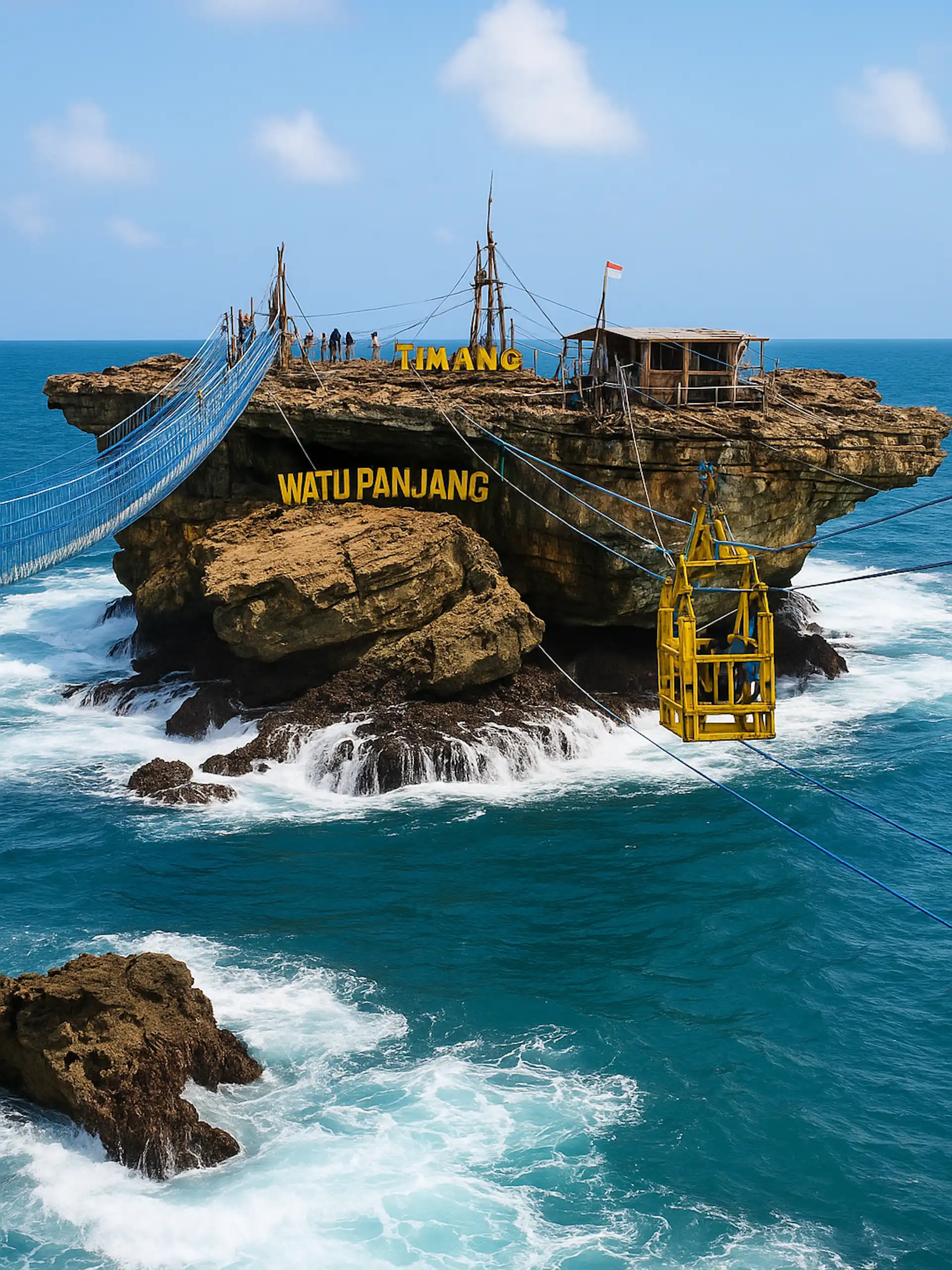
Pulau Watupanjang is located off the southern coast near Timang Beach. The island is known for its cable-car basket that crosses above the waves, along with a narrow suspension bridge that connects the cliffs. The rocky coastline and strong surf give the entire area a rugged, dramatic look, and the views from the top feel wild and wide open.
Critique:
The cable car and bridge feel intense. Safety gear is basic, and the ride depends on weather conditions. The area also draws visitors who come only for photos, so it can feel crowded during peak hours.
Beringharjo Market
Beringharjo Market is Yogyakarta’s main indoor market. The aisles hold fruit, vegetables, textiles, spices, and small food stalls. The air feels warm and lively, and vendors call out gently as you pass. The space reflects daily life more than tourist life, and you can watch people prepare ingredients, buy snacks, and see how much of the city’s food culture starts here.
Critique:
The lanes feel tight, and the heat builds fast. Some stalls accept cash only, and prices may shift between vendors. Go earlier in the day if you want more room to move.
Best Time to Visit Yogyakarta
The best time to visit Yogyakarta is during the dry season, from May to September. The days are clearer, and the chances of heavy rain are lower, which makes it easier to plan outdoor activities like visiting Borobudur at sunrise or taking a jeep tour on Mount Merapi. The air is still humid, but the weather feels more predictable, and the roads are easier to navigate after a long rain-free stretch.
The shoulder months of April and October also work well. You may get short bursts of rain, but the crowds thin out, and the main sites feel calmer. These months can be a sweet spot if you want good weather with fewer people.
From November to March, the rainy season settles in. Downpours can be sudden and strong, and the humidity rises. You can still enjoy the city, but outdoor plans may shift unexpectedly. This is when a local told us not to trust the forecast—storms and bright sunshine trade places without warning, sometimes in the same hour.

Weather in Yogyakarta
Take all the above with a grain of salt and go whenever you want. A local told us not to rely on the weather forecast at all. Stormy rain can show up in the dry season, and scorching heat can hit during the rainy season. The air stays humid, and we found ourselves sweating through most of the day. Even though it feels counterintuitive, people recommend wearing a thin layer of fabric outdoors to protect your skin from the sun, especially if you plan to stay outside for a while.
Like it. Pin it.


I love sharing stories, lessons from abroad, and tips for curious travelers. If my work has inspired you or made you smile, please buy me a coffee. Your support helps me keep the blog running—at no cost to you.
My articles are available as mobile apps for offline reading and GPS-assisted directions.
Download my articles on GPSMyCity.
This post contains sponsored and/or affiliate links, and I may earn a small commission.
Discover more from Duffel Bag Spouse Travels
Subscribe to get the latest posts sent to your email.


